Why Hospitals Are Moving from Standalone Devices to Managed Safety Ecosystems
Why Hospitals Are Moving from Standalone Devices to Managed Safety Ecosystems
11th August 2026
For many years, British hospitals have relied on individual security devices to manage safety across their sites. Radio handsets, CCTV cameras, alarms and access control systems were often implemented independently over a number of years, each serving a specific purpose. While these individual tools remain essential, many NHS organisations are now recognising that isolated devices alone are no longer enough to manage the complex safety challenges that modern hospitals face.
Instead, healthcare providers are increasingly moving towards managed safety ecosystems: integrated platforms that connect communication, video security, alarms and analytics into a unified system. This approach allows hospitals to move from reactive responses to proactive incident prevention and faster coordination.
The Limits Of Device-Based Security
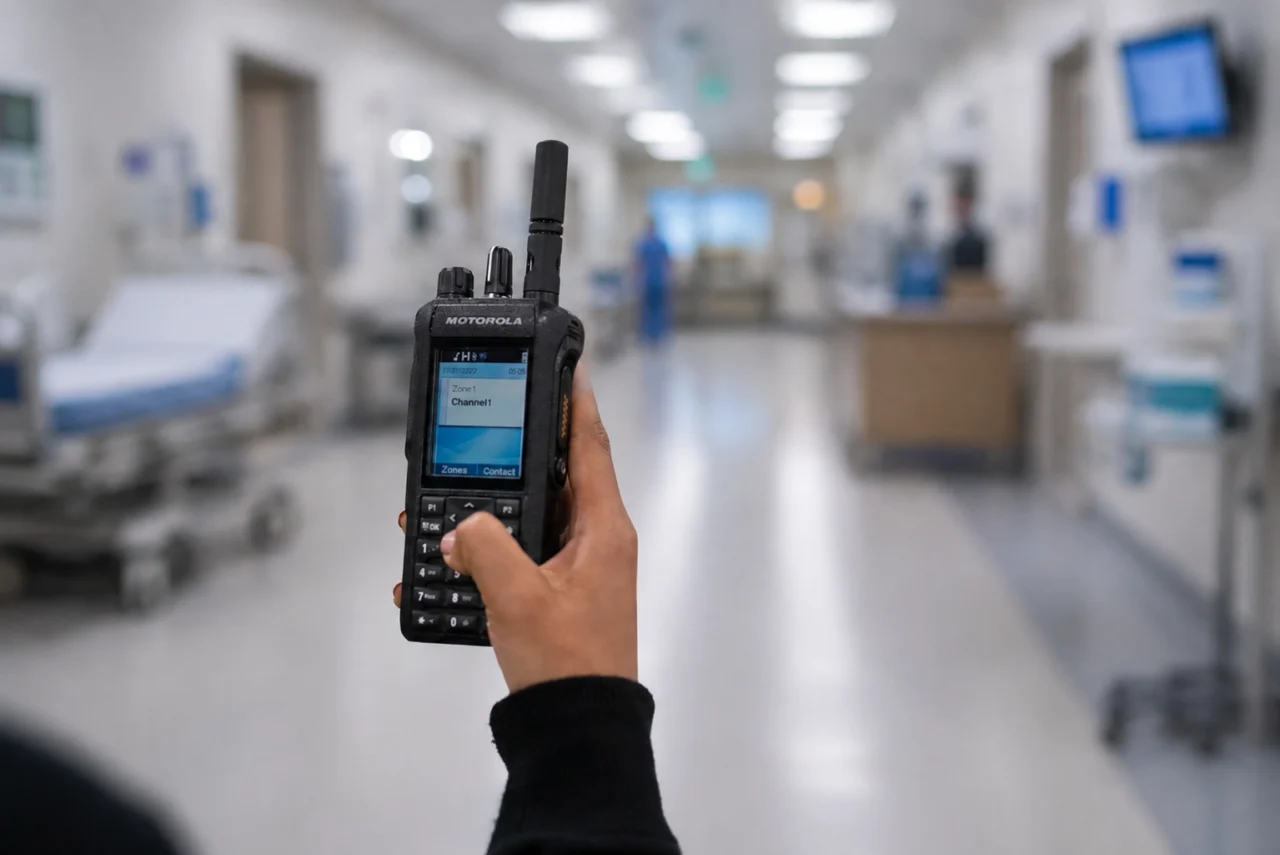
Traditional security setups often rely on separate systems that do not communicate with one another. For example, security teams may use a two-way radio communication system for coordination while CCTV footage is monitored separately and alarms are handled through another platform entirely. This is because of the way that most hospital communication systems have evolved over time – being added to piecemeal as needs dictate, without much integration or central planning.
Regardless of the cause, this fragmentation can slow down response times and make it harder for teams to gain a complete picture of an unfolding situation. When incidents occur, teams may need to manually relay information between systems, increasing the risk of delays or miscommunication while the situation unfolds, and also complicating the matter of post-incident review.
Why Integrated Safety Ecosystems Are Gaining Ground
Managed safety ecosystems solve this problem by connecting multiple technologies into a single operational framework. While the various hardware devices (Motorola Solutions radios, body worn cameras etc) all play important roles in modern hospital security, communication efficiency is the thread that connects them all together. Without a reliable way for teams to share information instantly, even the most advanced devices can struggle to deliver their full value.
In an integrated system, radios, video systems and alert platforms work together to provide real-time situational awareness across the entire hospital environment. For example, if a security officer encounters an incident, they can immediately alert colleagues using their Motorola security radio. At the same time, the integrated video system can provide a live visual feed, while alerts can be shared across relevant the teams instantly.
This level of integration enables hospitals to:
- Respond to incidents faster
- Improve coordination between departments
- Reduce reliance on manual communication processes
- Enhance overall staff and patient safety
Rather than operating as independent tools, each technology becomes a contributing part of a wider safety network.
The future Of Hospital Safety
As hospitals continue to face growing operational pressures and evolving security risks, the shift toward managed safety ecosystems is likely to accelerate. By integrating communication, video and intelligent monitoring technologies, NHS Trusts can create a more coordinated and proactive approach to safety.
If you’d like to find out more or discuss your security needs with one of our team, please contact CSE today by clicking here, or call us on 01480 773540.
Hospitals are moving beyond standalone security devices toward connected safety ecosystems. From integrated video and alerts to reliable two-way radio communication system, healthcare organisations are rethinking how technology works together to improve staff safety and incident responses. Read our latest blog to learn why this shift is happening.