Why Facilities Managers Are Rethinking Mobile Phones for Critical On-Site Communications
Why Facilities Managers Are Rethinking Mobile Phones for Critical On-Site Communications
10th Sep 2026
In modern facilities management, reliable communication is a cornerstone of operational resilience and safety. Yet in many industries, executives are increasingly questioning a longstanding assumption: that mobile phones are the most reliable and convenient tool for critical on-site communications.
Smartphones have the advantage of familiarity and broad functionality, it’s true, but they were not designed as mission-critical communication tools. As the needs of organisations evolve and the stakes associated with on-site incidents rise, many facilities managers are rethinking mobile phones in favour of purpose-built alternatives like portable two-way radios and two way radio communication systems.
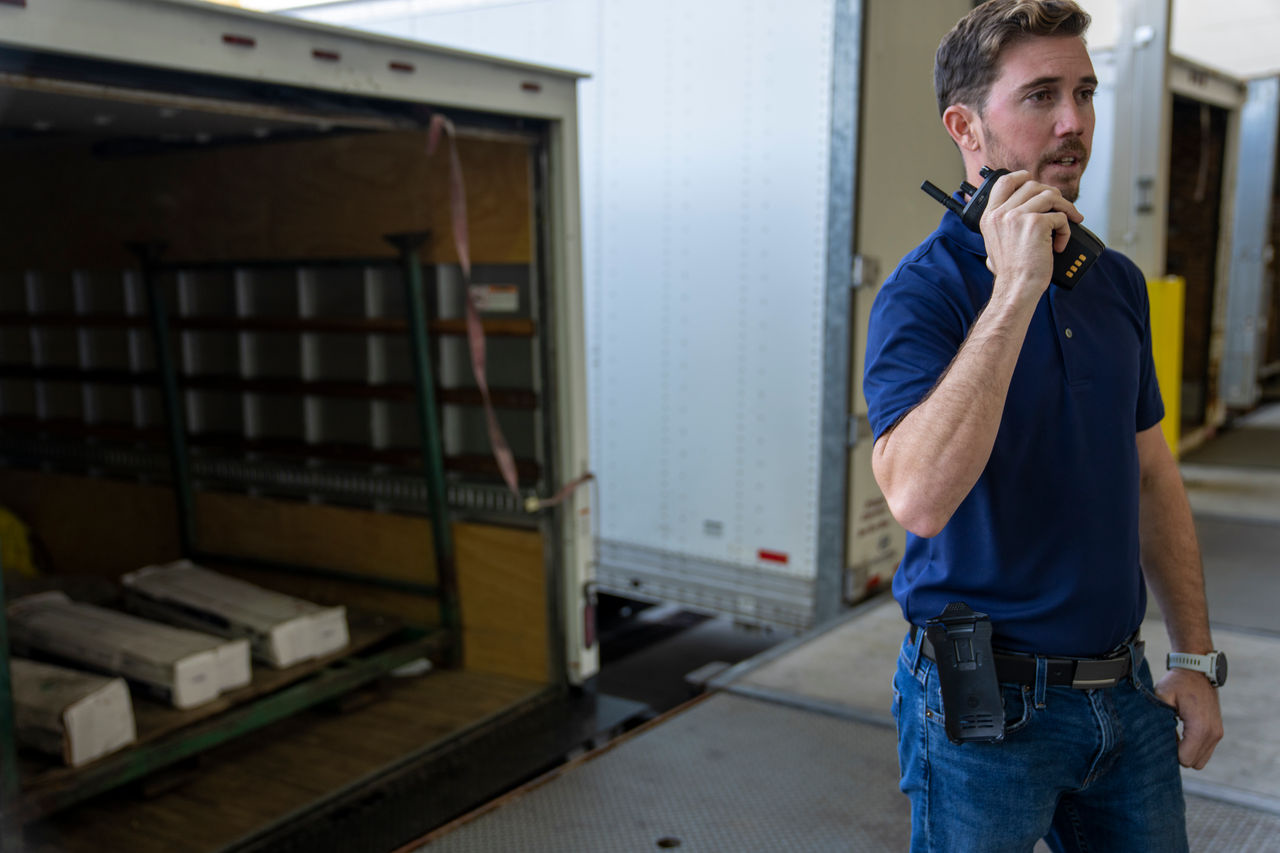
Mobile Vs Portable Radio: The Limits Of Mobile Phones In Operational Settings
Mobile phones have undeniably transformed everyday communication – within the workplace as well as our personal lives. But their limitations become tangible in the high-intensity environment of facilities operations. This is for several reasons:
- Network dependence: Mobile coverage can be unpredictable in congested or shielded spaces such as underground carparks, warehouses, or across extended campuses, and can also be highly weather dependent. During peak usage times (e.g. New Year’s Eve) or network outages, critical communications can stall.
- Dialling & alerting delays: Traditional phone calls require manual dialling and ringing, even with quick dial settings enabled, and phones normally have to be unlocked before they can be used. This can increase delays and friction in time-sensitive situations where each wasted second matters.
- Distraction risk: Smartphones, by design, support a vast array of apps and notifications. Fun and entertaining, yes, but in critical contexts, this can divert attention away from urgent tasks.
These constraints can have tangible consequences for real-time coordination, incident response, and operational control in emergency situations, increasing the risk of misunderstandings and duplicated effort.
Two-Way Radios: Purpose-Built For Critical Communication
In contrast to smartphones, modern two way radio communication systems are engineered specifically for on-site voice communication, giving you several operational advantages:
- Instant push-to-talk connectivity: With a dedicated push-to-talk button, team members can broadcast instantly to customisable groups or individuals without dialling, waiting, or navigating internet-dependent apps. This immediacy is especially valuable during emergencies and rapid-response scenarios.
- Reliable, dedicated spectrum: Licensed and professional radio systems operate on dedicated frequencies with reduced interference, delivering clear voice calls even when mobile networks are congested or unavailable.
- Rugged, purposeful design: Radio handsets are designed for durability, simple user interfaces, and long battery life, qualities that align better with the demands of operational environments than delicate smartphones, which are notoriously easy to break or damage.
These qualities have the potential to improve response times and situational awareness, and strengthen collaboration across your organisation. A good example of the modern, response-focused devices now used by many businesses is the Motorola Solutions R5 MOTOTRBO™ NKP Two-Way Radio (licensed portable device), which delivers clear, reliable voice communication in demanding environments and enables efficient team coordination among your frontline staff. Next-gen radios like the R5 have better voice clarity and signal reliability than earlier generations of radio, as well as a longer operational battery life and a simplified, intuitive communication workflow that helps minimise communication gaps in critical situations.
What Next?
If you would like to discover the benefits of a two way radio communication systems and how it can support your incident response strategy, please contact the team at CSE today by clicking here, or by calling 020 7183 4391.