Addressing The 4 Biggest Safety Risks To NHS Staff
Addressing The 4 Biggest Safety Risks To NHS Staff
21st August 2026
NHS hospitals are among the most demanding working environments in the UK, and while healthcare professionals dedicate their careers to caring for others, many face significant personal safety risks every day – from distressed patients to emergency incidents requiring rapid coordination.
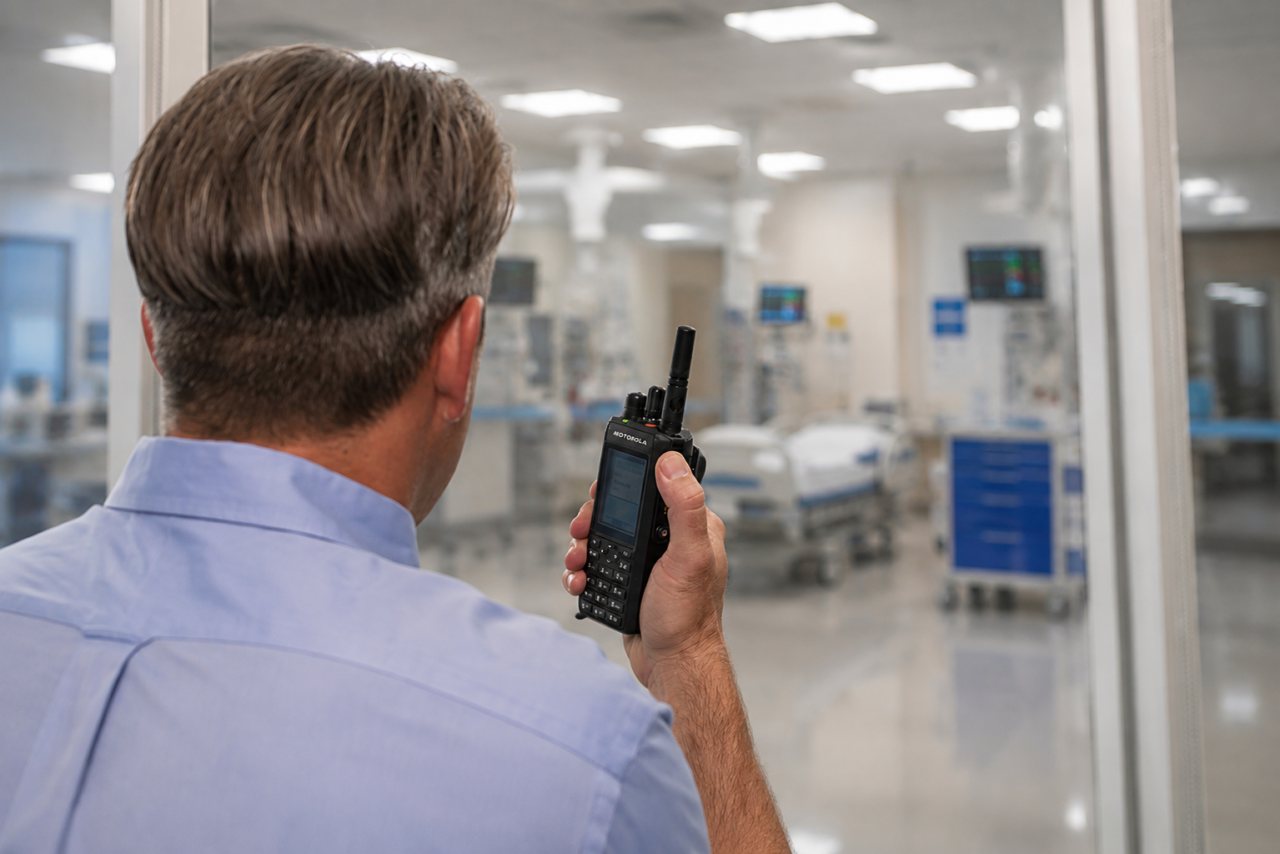
As hospitals seek to strengthen staff protection, communication technology is becoming a vital part of the solution. In particular, Motorola Solutions two-way radio system provide the instant communication needed to prevent incidents from escalating and ensure staff can respond quickly to threats or emergencies.
In this article, we explore the biggest systemic safety risks NHS staff face today and how reliable communication systems help to mitigate them.
1. Violence And Aggression From Patients Or Visitors
Violence and aggression have become one of the most pressing safety concerns in NHS hospitals.
According to the 2024 NHS Staff Survey, 14.38% of NHS employees reported experiencing physical violence from patients, relatives, or members of the public within the previous year. This means roughly one in seven NHS workers faced physical assault while performing their duties. In addition, 25% of staff reported harassment, bullying or verbal abuse from patients or the public during the same period. Emergency departments and mental health services often see the highest risk levels due to overcrowding, stress, intoxication, and long waiting times.
How two-way radios help:
Fast communication is critical when situations escalate.
With Motorola Solutions 2 Way Radios for the UK, hospital staff can:
- Instantly alert security teams
- Trigger emergency alerts or “lone worker” alarms
- Coordinate response teams between wards
- Reduce response times during violent incidents
Because radio communication is instant and independent of mobile networks, it enables faster intervention before incidents worsen.
2. Delayed Emergency Response During Critical Incidents
Hospitals operate in complex environments where emergencies can occur at any moment. These may include:
- Cardiac arrests
- Medical emergencies
- Fire alarms
- Security incidents
- Missing patients
- Evacuations
In large, busy hospitals, keyworkers are often distributed across multiple floors, departments, and buildings, and so if communication relies solely on phones or paging systems, response times can be delayed. Two-way radios solve this challenge by enabling real-time group communication. Instead of making multiple calls, staff can broadcast alerts instantly to an entire team.
With Motorola radios, hospitals benefit from:
- Dedicated emergency channels
- Push-to-talk communication
- Clear audio in noisy environments
- Coverage across large facilities
This ensures that the right teams receive alerts immediately and can respond without delay.
3. Lone Worker Safety Risks
Lone working is another risk that affects many hospital employees. While healthcare delivery is typically team-based, there are numerous roles where staff may find themselves working alone, particularly during night shifts or in quieter areas of large hospital sites. Porters, cleaners, facilities teams, security personnel and community healthcare workers can all face situations where immediate assistance may not be nearby or immediately accessible. Modern two-way radios can strengthen lone worker safety through features such as emergency panic buttons, man-down alarms and location tracking. These capabilities allow colleagues and security teams to respond immediately if a worker encounters an incident or becomes unresponsive.
4. Poor Coordination During Large Hospital Events
Large-scale incidents and hospital emergencies also highlight the importance of reliable communication. NHS organisations must prepare for a wide range of major Trust-wide events, including potential mass casualty incidents, building evacuations, industrial action, power outages, and seasonal illness or pandemic-related pressures. During these situations, staff from multiple departments must coordinate rapidly to maintain patient safety and operational continuity.
While event two-way radios are often used for temporary communications during large incidents or short-term emergency deployments, hospitals usually require a permanent professional radio network capable of delivering reliable coverage across multiple wards, car parks, and clinical sites.
Professional radio networks provide:
- Reliable communication channels even when mobile networks fail
- Direct communication between clinical, security, and facilities teams
- Clear coordination between departments during both normal operations and emergencies
This is why many NHS organisations rely on Motorola radio solutions as part of their emergency preparedness strategies.
Why Motorola Radios Are The Trusted Communications Brand In Healthcare
Motorola two-way radios are widely used in NHS Trusts and hospitals for several reasons:
- Instant push-to-talk communication capability
- Exceptional audio clarity in busy hospital environments
- Secure and encrypted channels
- Long battery life for 24/7 operations
- Integration with third party hospital security and alarm systems
What Next?
At CSE Crosscom, we help NHS Trusts deploy a tailored Motorola Solutions two-way radio system designed specifically for hospital environments. To find out more, please contact one of our specialists today by clicking here, or by calling 020 7183 4391.