Do Airport Staff Need Body Worn Cameras (BWCs)?
Blog: Do Airport Staff Need Body Worn Cameras (BWCs)? Published: 06/08/2025
Do Airport Staff Need Body Worn Cameras (BWCs)?
The debate about the benefits and potential controversies surrounding body worn cameras (BWCs) has important ramifications for airports in the UK. As passenger numbers rise and operational demands increase, airport authorities are under growing pressure to ensure safety, transparency, and efficient incident management across their facilities. Body worn cameras are increasingly seen as a valuable tool to support frontline staff, reduce the risk of confrontation, and provide reliable evidence in disputes or investigations.
In this article, we will explore both sides of the argument—highlighting the advantages of deploying body worn cameras in airport environments, while also addressing the challenges, privacy concerns, and best practices that should guide their responsible implementation.
Balancing need and feasibility
For large UK airports such as Gatwick and Heathrow that deal with large crowds and frequently complex operations and security needs, the benefits of BWCs are likely to outweigh the costs. There are various scenarios at busy airport terminals in which BWCs can make a significant difference to the safety of both airport staff and travellers, for example:
- Security/immigration checkpoints: body worn cameras on security and customs personnel provide a clear record of all interactions between staff and travellers, demonstrating that procedures are followed and ensuring that follow-up can be taken if complaints arise.
- Disputes over lost luggage: baggage handling and retrieval areas are hotspots for disputes between passengers, as well as theft and terrorist activity. BWCs provide neutral records to help resolve disagreements quickly and fairly, and provide early warning of potential security risks.
- Emergency response coordination: airport security officers and police responding to medical emergencies, threats, or theft can capture events in detail through their BWCs, assisting real-time coordination, improving response plans, and assisting post-incident investigations.
- Passenger disruption: antisocial or rowdy behaviour in passenger areas, bars, and other public spaces can be recorded via BWCs, helping aid de-escalation efforts and providing evidence for potential legal proceedings. If conflict arises, the visible presence of a body camera can often encourage both the passenger and employee to remain calm and civil, knowing that all interactions are being documented. Footage of difficult passenger interactions can also be used in training exercises to teach other airport personnel how to efficiently de-escalate emerging situations.
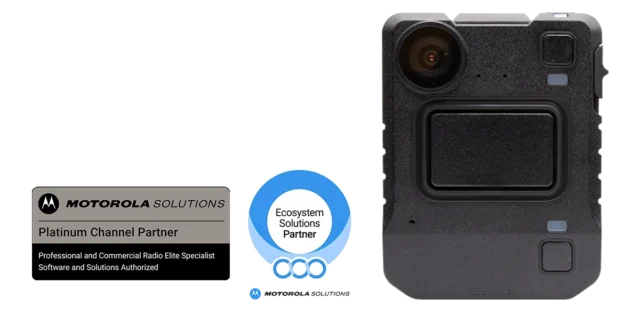
Featured Solution: Motorola Solutions VB400 Body Worn Camera
As a Platinum and Ecosystem Partner of Motorola Solutions, CSE Crosscom proudly recommends the VB400 body worn camera as a leading option for airport environments. Designed for frontline professionals, the VB400 offers:
- Full-shift recording with a robust battery life, ideal for long airport security shifts.
- Pre-record capability to ensure no critical moments are missed before the record button is pressed.
- Integrated GPS and Bluetooth for real-time situational awareness and location tracking.
- Secure, encrypted footage to meet strict compliance and data protection standards.
The Motorola Solutions VB400’s rugged design and user-friendly operation make it particularly well-suited for high-traffic, high-stakes environments like airports. Whether managing frontline passenger services, handling security incidents, or coordinating emergency responses, the VB400 supports transparency, accountability, and efficiency at every stage.
Challenges and concerns with body worn cameras at airports
Despite their value, however, deploying body worn cameras effectively at an airport requires careful planning and a well-defined policy framework. Policies should outline when and where cameras should be worn, the processes for storing and accessing the data collected by cameras, and how legitimate privacy concerns will be addressed.
Recording the actions of individuals without their explicit consent, even in public settings like airports, raises a number of privacy concerns. Airports are used by travellers and visitors from various backgrounds, many of whom feel uncomfortable being filmed. Employees also might feel uneasy about having their daily tasks documented. Best practices for using body worn cameras at airports include:
- Signage that informs passengers that recording from body worn cameras is in progress, ensuring accountability and transparency.
- Full compliance with UK data protection legislation and international best practices for data collection, storage, and access.
- Airport-wide policies around the storage, access, and use of body worn cameras and footage. This is essential to prevent data breaches and misuse.
There are also infrastructure challenges associated with body worn cameras. In large airports, an estate could include thousands of cameras and hours of associated labour, as well as charging, secure storage, and IT equipment. For these reasons, body worn cameras are not always used in smaller domestic airports and those with low passenger volumes, who often rely on CCTV and other alternative security measures.
What next?
Get in touch with CSE Crosscom today to discuss your security and communication needs, and discover the advantages of body worn cameras at your airport. As Platinum and Ecosystem Partners of Motorola Solutions, we can help you deploy trusted, high-performance body worn camera solutions like the VB400 to enhance safety, accountability, and operational effectiveness.